Is There Something I Can Feed to My Horse to Help With Bugs
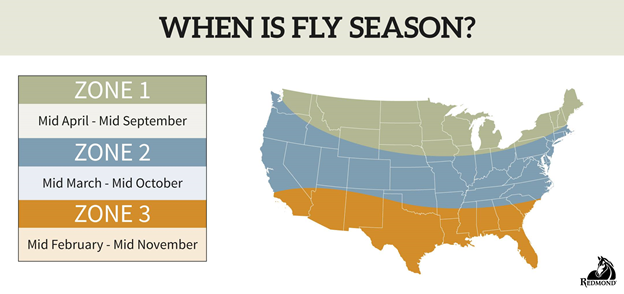
April 11, 2022 No good horse owner likes seeing their horse harassed by flies. The swishing, swatting and stomping can drive both a horse and rider to distraction. But flies on horses are more than annoying. They bite and irritate your horse's skin, cause sores, deposit larvae and bacteria, and are carriers of disease. They can also make your horse nervous and interrupt performance. That's why fly control around barns and stables and inhibiting flies from landing on your horse is essential. Ready to take action to rid your horse of pests? You're in the right place! Let's cover the basics of when fly season starts, what and why flies are harmful to horses, and helpful ways you can protect your equine in the battle of the bugs. Quick Content Guide Flies don't care that your calendar says spring starts three weeks into March. They will start to surface, feed, and breed when it feels warm and comfortable enough for them to do so. The map below shows generic zones for when fly season begins and ends across the continental United States. Find your area to pin down the time period you need to be armed and ready for flies to attack. As a proactive measure, acquire your preferred fly-fighting supplies sometime during the winter. Purchasing early will help you be prepared if you experience an earlier-than-expected spring and outbreak. Once fly season is in full swing, plan for a battle that lasts well into the end of fall. It's helpful to know the types of flies that land on horses, how they attack, and where they reproduce. Having this knowledge in your pocket can help you decide on prevention and treatment methods to mitigate these pests. There are two main categories of flies: biting flies that feed on animal blood, and nonbiting flies that feed on bodily secretions. There are also other flies that lay eggs on horses. All are bad. And since the term "fly" is generic for any small, flying insect, that also includes gnats and mosquitoes. Let's take a closer look at the flies PennState Extension notes are most active in biting, bugging, and transmitting diseases in horses. Below you'll find a brief description of what each species looks like, where it lands, what it does, and how it spreads. On the surface, flies and gnatscan cause itching, hives, hair loss, skin thickening, abrasions, and ulcerations. Each of these conditions leave your horse susceptible to bacteria and infection. While that's distressing enough, the problems perpetuated by flies go more than skin deep. Here are some common diseases spread by flies (including gnats and mosquitoes) on horses: Watch the short video below with Dr. Jessica Huntington to get her take on biting insects, vector diseases, and natural fly control treatment. Even conscientious horse owners can sometimes feel like they're losing the battle of the bugs around stalls and barns. A fly infestation is frustrating for you and especially your horse—since it really only has a tail to use to drive away flies. The good news is you have quite a few options to fight flies on all fronts. Here are a variety of fly deterrents that either block, repel, or reduce insects so you can keep yourself, your horses and other animals comfortable during fly season. Feed-through fly control can be an effective means to reduce the overall fly population on your property. A horse feed-through is a larvicide—it kills larvae from flies or mosquitoes before they mature into adults. As the name suggests, a feed-through is an additive fed to horses in the form of pellets. The active ingredient is mixed into the horse's manure through ingestion and digestion which stops the development of larvae and future flies in manure. While larvicides are not supposed to absorb into a horse's gastrointestinal tract, some horse owners may feel concern about feeding this type of product. If you pick a feed-through as one of your fly control methods, make sure you're informed about the product and feel comfortable giving it to your horse. If you're looking for a completely feedable, all natural fly repellent for horses that repels flies, click here to skip to the bottom of the article. Layering on protection from the outside is a great way to block pests and help your horse stay fly free. You can get gear to protect them from head to hoof. There are mesh fly masks and boots, hoods, bonnets, veils, and fly sheets that fit your horse's body—and all in a variety of colors and prints to suit your horse's fashion style. Aside from picking your favorite print, we recommend choosing a material that's comfortable for your horse, cool, and durable enough to last the season. Check out this blog for more recommendations on choosing a fly sheet and the best brands. A good fly spray is essential to have on hand in the barn, when traveling, and during those sweltering summer days when flies just get out of control. These products repel insects and can be sprayed or wiped on, especially for application around the eyes. Horse fly sprays can last anywhere from several hours to several days, depending on the ingredients and if it's oil- or water-based. To help you feel more informed about your choices, this University of Kentucky article lists popular brands of spray and wipe-on repellents, plus the active ingredient and concentration in each brand. At Redmond, we believe natural is better for our equine friends. So always check ingredients, and perhaps look for a spray containing essential oils or other natural repellants. If you do choose a commercial spray, Pyranha fly spray for horses is a brand we like. Also, before covering your horse, make sure to test a small patch area to check for sensitivity or irritation to any product. From sticky tape to bug zappers, traps are a satisfying way to reduce the overall population of flies around your barn or property. Location, location, location is the key here. If you're using sticky traps, place them up high in barns or stalls where light and warmth reach and where your horse can't. Using an odor trap? Place it at least 50 feet from your barn or paddock. This will ensure you lure flies away from your horse instead of drawing them in. Bug zappers or other visual attractants should be placed just outside of paddocks, fences or stalls—close enough to be effective but far enough away that your horse can't tamper with it. And for best results, set your traps out by mid-spring, before flies begin laying eggs and become a bigger problem. For stalled horses in enclosed barns, adding a high-powered fan that points outward at entrances will also limit the number of pests getting in the door. You've heard of fighting fire with fire. Some companies offer a way to wage biological warfare on flies and reduce the overall population using parasites. Here's how it works: gnat-sized wasps (biteless and stingless) are released around your farm, stables, and pastures. The females seek out organic material like manure to deposit their eggs inside fly pupae. The eggs then hatch, feed on developing flies, and stop them from hatching. Since pest flies reproduce at a faster rate, fly predators need to be released every three to four weeks throughout fly season to remain viable. However, they're another safe and organic weapon in your fly-fighting arsenal. While it means some extra work for you, keeping a tidy stall, paddock or barn helps reduce flies and can go a long way in keeping your horse comfortable. Getting rid of organic debris and managing water sources is one of the most effective ways to control flies. Fresh manure is a breeding ground for flies. Removing it regularly—along with soiled or wet bedding and feed—will limit flies congregating and laying eggs in your horse's space. Once you've removed the manure or organic material, disc or spread it out instead of heaping it in a pile. This breaks it up, dries it out, and makes it far less habitable for pests. Also, make sure your horse's water is clean and fresh. Any source of stagnant or smelly water will attract gnats, mosquitoes and certain types of flies—none of which you want moving in with your horse. Tip over or get rid of containers that collect water. If you can't remove standing water from an area, adding minnows to small ponds or your horse's trough is a natural way to inhibit mosquito breeding. Larvicides with the bacteriumBacillus thuringiensis israelensis (Bti) or the insect growth regulator methoprene can also be added to ponds to kill larvae, and is considered safe for livestock. Besides external fly-fighting measures around your horse and barn, many horse owners also want to know what to feed horses to repel flies. Did you know garlic is one of the best and most natural horse fly repellents? Proponents have argued for years that it reduces flies on livestock—now there are numbers to prove it. In 2017,researchers in Saskatchewan determined cows fed with a trace mineral salt fortified with garlic had 52% fewer flies than control groups that received trace mineral salt alone. Looking for fly relief for your horses? Redmond Rock Crushed with Garlic is Redmond's loose trace mineral salt fortified with the power of garlic. Crushed Garlic is a great choice as a health booster and natural fly supplement for horses. It contains bioidentical garlic oil—the most bioactive, stable, and potent form of garlic. In addition, it delivers 60+ trace minerals your horse needs for optimum nutrition and hydration Crushed with Garlic is what we call a "sweat-through" repellent that offers your horse protection from the inside out. As a horse consumes the mineral salt, garlic is absorbed into the blood stream and sweat out through the pores to repel flies, ticks, and other insects . Read this testimonial from Crushed with Garlic customer Staci M. Fife: "I've been feeding this for 2 weeks. All 3 eat it with no issues, and best of all, I don't see any new welts, bumps or itchy spots on my sensitive skinned filly. Her eyes are less watery, and she seems so much more comfortable, with way less fly spray, and not bundled in a fly sheet in 100 degree weather." Give your horse a delicious mineral supplement and fly repellent that works! With Redmond Rock Crushed with Garlic, your horse will receive valuable health benefits, experience less flies, and feel more comfortable. Click below to try it today! © Redmond Equine 2022. All rights reserved.6 Tips to Keep Pesky Flies Away From Horses

When Does Fly Season Start?
What Kinds of Flies Are Attracted to Horses?
Stable Fly
Horn Fly
Horse Fly and Deer Fly
Black Fly

Gnat (biting midges or small flies)
Mosquito
Face Fly and House Fly
Bot Fly
What Diseases Can Horses Get from Flies?
6 Tips to Create a No-Fly Zone Around Your Horse
1. Use a Quality Feed-Through
2. Add Outer Fly Protection for Horses
3. Repel with a Horse Fly Spray
4. Set Out Fly Traps and Fans
5. Use Biological Fly Control
6. Reduce Standing Water and Keep Your Horse's Area Clean
What to Feed Horses to Repel Flies
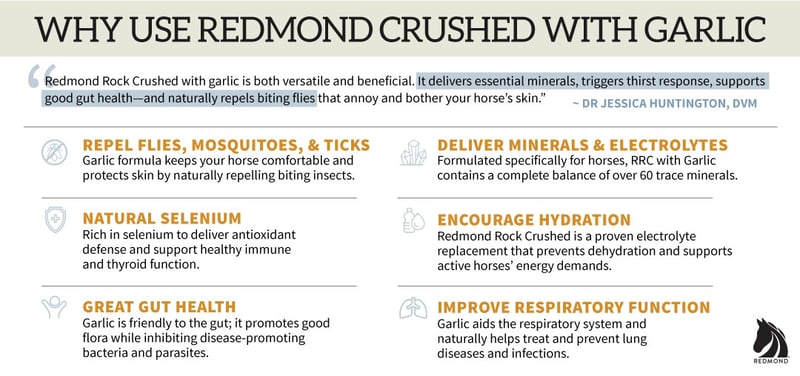
Best Natural Fly Repellent for Horses

Learn More
Source: https://blog.redmondequine.com/how-to-keep-flies-away-from-horses
0 Response to "Is There Something I Can Feed to My Horse to Help With Bugs"
Post a Comment